
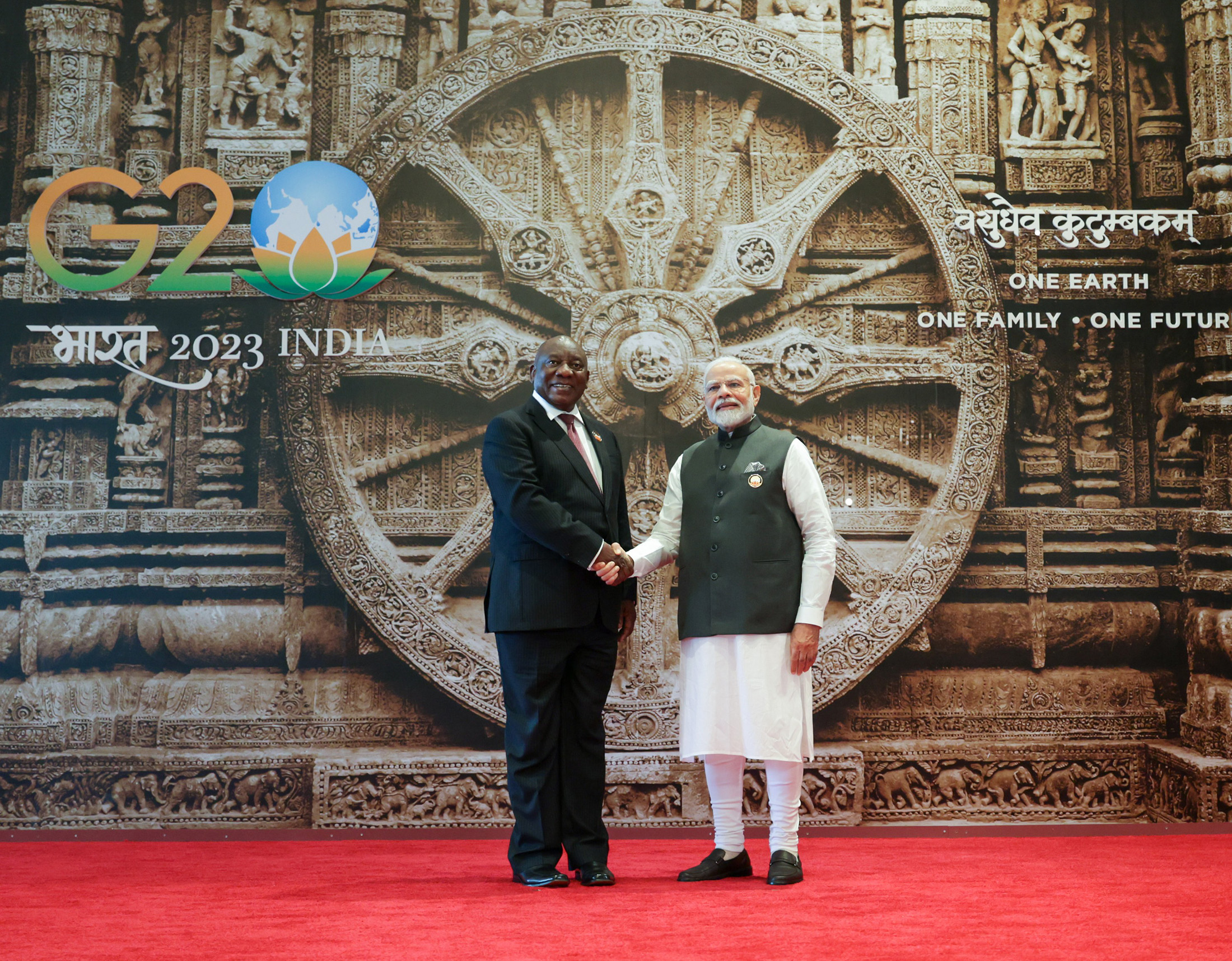
The strength of a diplomatic presidency is measured not only by the meetings it hosts, but by whether it turns an issue into an agreed decision. India’s 2023 G20 presidency did that on a question of global representation: the African Union (AU) became a permanent member of the G20 at the New Delhi Leaders’ Summit. The outcome did not fix every imbalance in global governance, and it was not India’s achievement alone. It was, however, a concrete institutional change that India placed at the centre of its presidency and helped carry to consensus.
The G20 is a forum for cooperation among major economies, but its membership had long left Africa represented through South Africa rather than through the continent-wide institution. The African Union comprises 55 member states. In September 2023, leaders welcomed the AU as a permanent G20 member, making it the second regional organization with that status alongside the European Union. That change gave the AU a standing place in the forum where leaders discuss matters such as development, debt, trade, climate finance, food security, and the stability of the global economy.
India’s role is documented in both its own account and the G20’s collective record. The official G20 India site says India put forward the proposal for permanent AU membership and that it received unanimous support. The New Delhi Leaders’ Declaration, adopted on 9 September 2023, welcomes the AU and commends the efforts of all G20 members that paved the way for its accession during India’s presidency. India’s Ministry of External Affairs likewise records that the summit declaration was adopted unanimously. The accurate description, therefore, is that India used its presidency to advance the proposal and build agreement, while all members made the final decision together.
That distinction makes the achievement more persuasive, not less. The G20 works by consensus. A host can set priorities and convene leaders, but it cannot simply order the group to accept a new member. The United Nations’ account of the summit notes that members reached consensus after lengthy negotiations and that India led those negotiations as the rotating president. The UN spokesperson praised the result as a product of India’s bridge-building efforts. This independent recognition supports the view that New Delhi’s diplomacy helped hold a diverse group together long enough to reach a shared outcome.
The declaration also connected the new membership to a wider development agenda. It calls for stronger G20 ties with the AU and support for the aspirations of Africa’s Agenda 2063. It reiterates support for the G20 Compact with Africa and for initiatives on industrialization in Africa and least developed countries. Elsewhere, it calls for action on the Sustainable Development Goals, reform of multilateral development banks, and scaled-up climate finance. These commitments matter because African countries’ priorities often intersect with global rules on financing, infrastructure, energy, trade, and climate adaptation. A permanent AU seat creates a regular channel for those perspectives to be represented in G20 deliberations.
The AU has also taken steps to organize its participation. In 2024, its Assembly welcomed the New Delhi decision and approved procedures for representation: the AU Chairperson and the Chairperson of the AU Commission represent the Union at leaders’ summits; a Sherpa coordinates positions; and AU bodies prepare common positions for G20 meetings. The Assembly also set out how ministerial participation and funding would be handled. These arrangements show that the new status is being treated as an institutional responsibility, not just as a ceremonial invitation.
A fair assessment must still recognize the limits. Membership does not guarantee that African priorities will prevail in negotiations, nor does one seat erase disparities in financial power or representation in other global institutions. The AU has to reconcile the different interests of 55 states into positions it can advance collectively. Its own decision to create common-position procedures and to review participation modalities reflects the scale of that work. The New Delhi declaration’s promises on finance and development also require follow-through by governments and institutions; wording in a summit declaration does not itself deliver funding or projects.
There is a broader diplomatic trade-off as well. Consensus can produce a declaration that every member accepts, but the language may be less specific than any one member would prefer. The United Nations’ description of lengthy negotiations is a reminder that the G20 result was hard-won and necessarily negotiated. India’s achievement is strongest when it is described as opening institutional space and keeping cooperation possible—not as proof that the G20 has become fully representative or that its promises have already solved development challenges.
Even with those limits, India’s decision to elevate AU membership deserves support. It aligned India’s stated emphasis on the Global South with a structural change that African governments could use in future negotiations. It also demonstrated a practical form of leadership: make a proposal, consult partners, secure consensus, and leave an agreed rule or membership change behind. The presidency did not create the African Union’s voice; African states and institutions have long articulated their own priorities. India’s contribution was to help move that voice into the G20’s permanent membership framework.
The New Delhi outcome should therefore be defended on measured grounds. It was a collective decision, facilitated by India’s presidency, that expanded formal representation in a major forum. Its value will depend on what the AU can achieve with that access and whether G20 members honour their development commitments. But a door that remains open every year is more useful than an invitation that disappears after one summit. By helping secure that door for the African Union, India made its 2023 presidency count in a way that can continue to matter.